Living Museum of Learning
99 Points
Cloud had learned Python's for loop only one day earlier.
In class, he had struggled to apply it to a real drawing task. His first three attempts failed quickly. Each time, he quietly deleted the loop and returned to the longer method that he knew would work.
Then, in the last ten minutes of class, everything changed.
His fourth attempt worked.
His fifth followed naturally.
That evening, his homework was clear:
Chinese
请画一个标准的围棋棋盘,使用昨天和今天学到的 for 循环。
English
Draw a standard 19×19 Go board using the for loops you learned yesterday and today.
After dinner, something unusual happened.
Instead of opening a game, Cloud sat down to work on his homework.
His father quietly watched.
His mother couldn't hide her surprise.
Chinese
太阳从西边出来了。
English
The sun has risen in the west.
Cloud finished the assignment before 10 p.m.
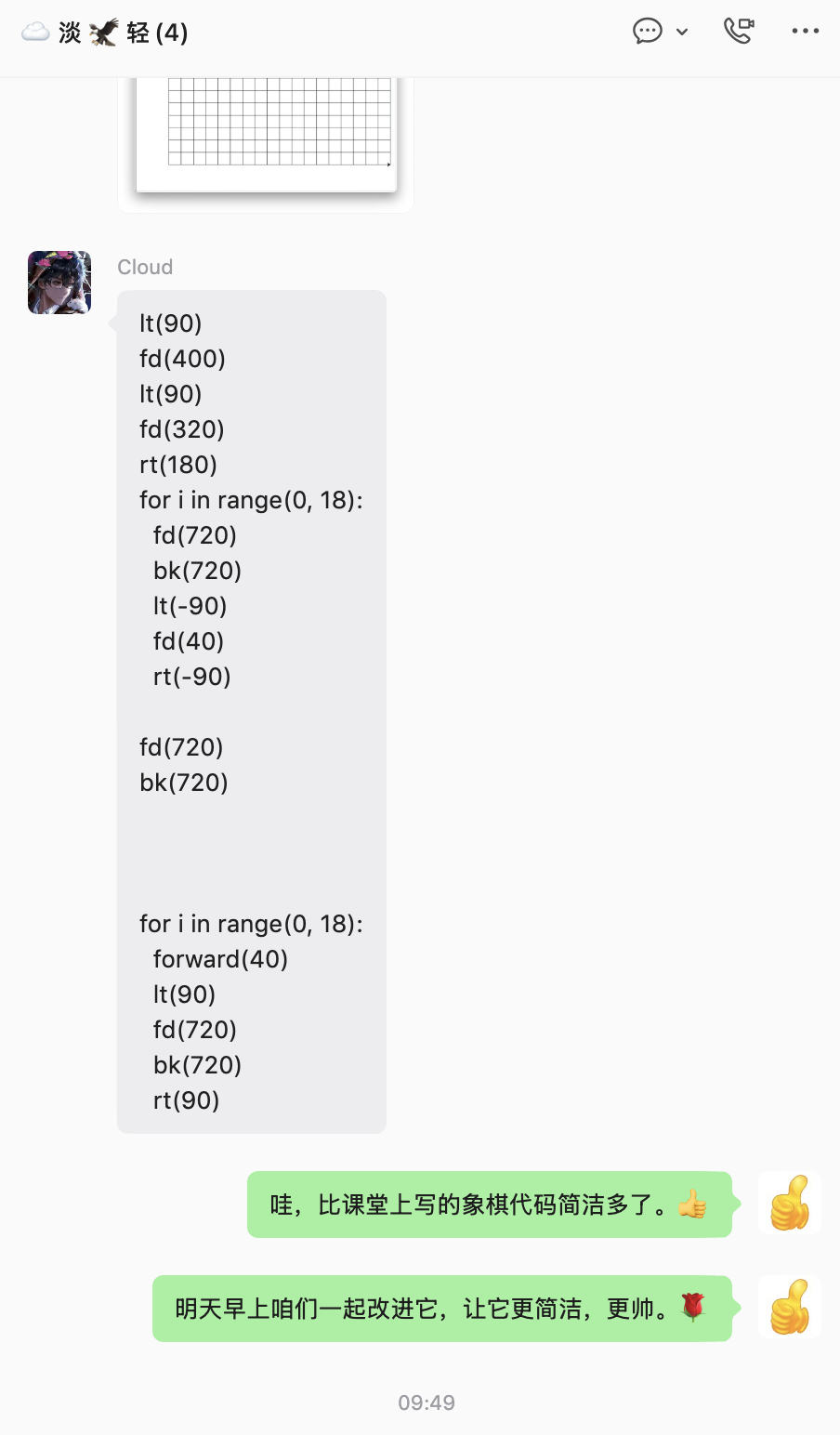
He submitted both the screenshot and the source code.
The code was dramatically shorter than the classroom version.
Two simple for loops had replaced dozens of repeated commands.
There were still two lines that were too long.
I replied:
Chinese
我看见两处错误。我想你早就看见了。👀
English
I see two mistakes. I think you've already noticed them. 👀
A few minutes later, he fixed both.
I looked at the final submission.
It wasn't perfect.
It was better.
Much better.
I smiled and replied:
Chinese
哇,比课堂上写的象棋代码简洁多了。👍
English
Wow! This is much cleaner than the Chinese chess board code you wrote in class. 👍
Then I gave him a score.
Chinese
99分。出色完成了!
English
99 points. Excellent work!
Why 99?
Because one point was intentionally left for tomorrow.
Not to correct a mistake.
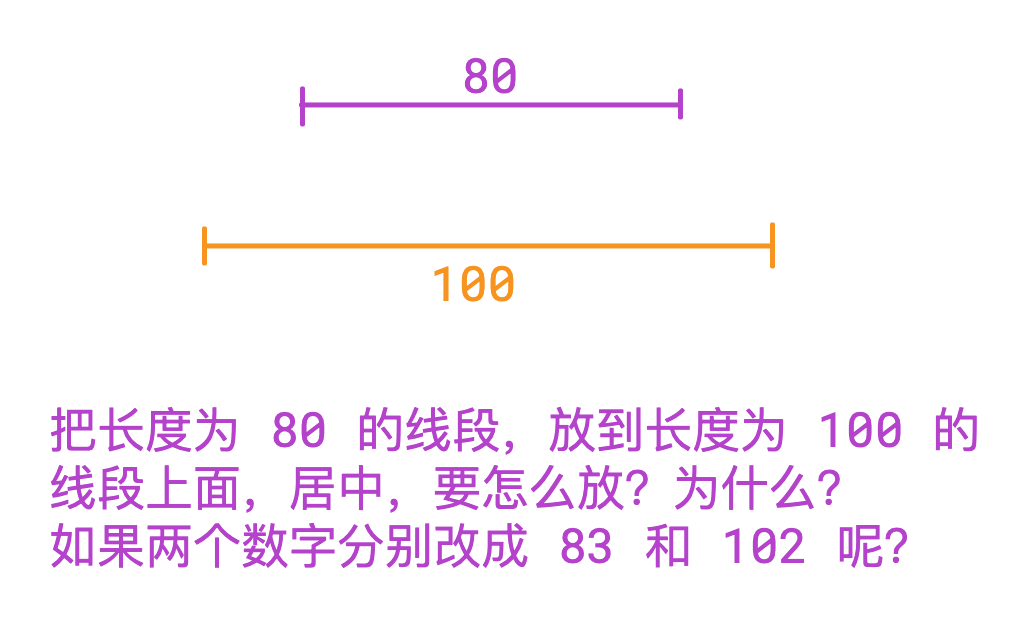
But to discover a new mathematical idea.
Chinese
明天咱们开始研究如何将棋盘居中的数学问题。
English
Tomorrow we'll explore the mathematics of centering the board.
Programming is not only about making code work.
It is about learning to see patterns, remove repetition, improve quality, and keep asking:
Can this be made simpler?
Cloud's homework was not the end of a lesson.
It became the beginning of another one.
A Go board naturally led to a question about centering.
Centering would naturally lead to algebra.
The next lesson had already begun before this one ended.
A beginner can transform a long sequence of repeated commands into elegant loops after just one day—not because someone rewrote the code for him, but because he kept thinking until the pattern became his own.
Growth happens through a cycle of trying, failing, improving, and refining. A teacher's role is not to provide the final answer, but to leave one meaningful question waiting for tomorrow.
The greatest achievement was not a Go board or two successful for loops. It was the emergence of craftsmanship: a student who cared enough to improve his own work, and a family who witnessed that transformation together.
"You've done something wonderful today. Now let's discover something even more beautiful tomorrow."