
Living Museum of Learning
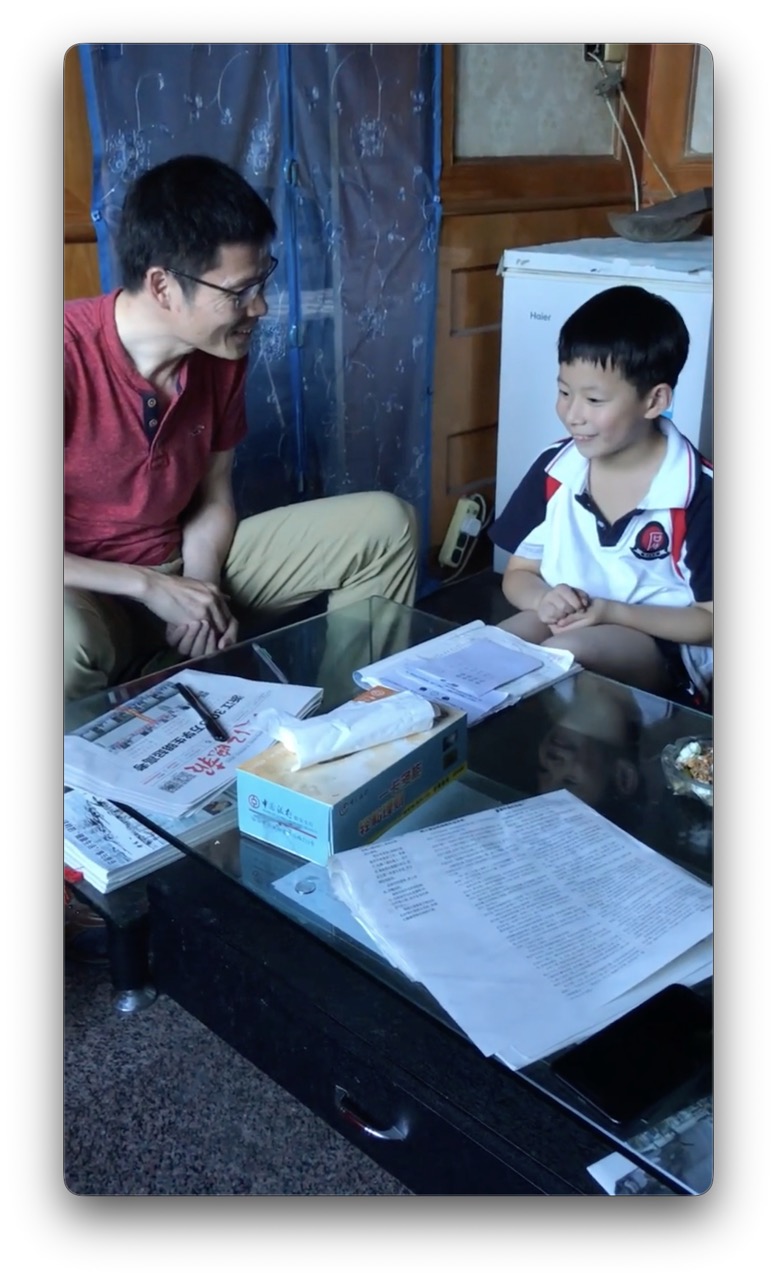
The Learning Moment in Ethan's Math Class
Ethan was a Grade 2 student working on a deceptively simple question:
"How many balls do you need to grab from a bag to guarantee getting a black ball?"
Instead of rushing to calculate, he imagined reaching into the bag one ball at a time. As he reasoned through the possibilities, his body reflected his thinking—his eyes closed, his right hand moved gently as if drawing invisible balls, and a quiet smile appeared whenever an idea emerged.
The video captures not only his answer, but the invisible process of reasoning becoming visible.
Ethan arrived at the answer:
"15?"
It was correct—but uncertainty remained.
Rather than confirming it, I asked another question:
"Why is 15 right, but 14 could be wrong?"
At that moment, the lesson shifted.
The goal was no longer finding the answer.
The goal became understanding why the answer must be true.
As Ethan continued imagining the balls one by one, he began separating possibility from certainty.
He wasn't memorizing a rule.
He was constructing one.
His gestures, facial expressions, and growing confidence revealed the exact moment when reasoning replaced guessing.
The mathematics emerged naturally from his own thinking.
Children often discover mathematics not by performing calculations, but by building mental models of real situations.
A simple question about colored balls became an exercise in logical reasoning, worst-case thinking, and proof.
The answer mattered.
But the reasoning mattered much more.
The deepest learning occurred when Ethan was invited to explain his thinking instead of merely giving the correct number.
A child can develop surprisingly sophisticated logical reasoning when invited to think instead of memorize.
By asking questions that extend thinking rather than confirm answers, the teacher encourages the learner to build an internal mental model and discover the logic independently.
When children learn to explain why an answer must be true, they develop habits of reasoning that extend far beyond mathematics into lifelong problem solving.