Living Museum of Learning
“Then I'm going to play it at lunch!”
Today was Cloud's fourth one-on-one class.
We began with Grade 5 coordinate geometry. Cloud completed the unit quiz with a perfect 5/5. We then moved to Medium-level Sudoku, both Classic and Killer. Compared with yesterday, his thinking was noticeably calmer and more deliberate. For the first time, I didn't have to interrupt him with reminders like, "Stop!", "Slow down!", or "Be careful." His self-control was beginning to replace my voice.
After a 15-minute break, we switched from solving problems to creating one.
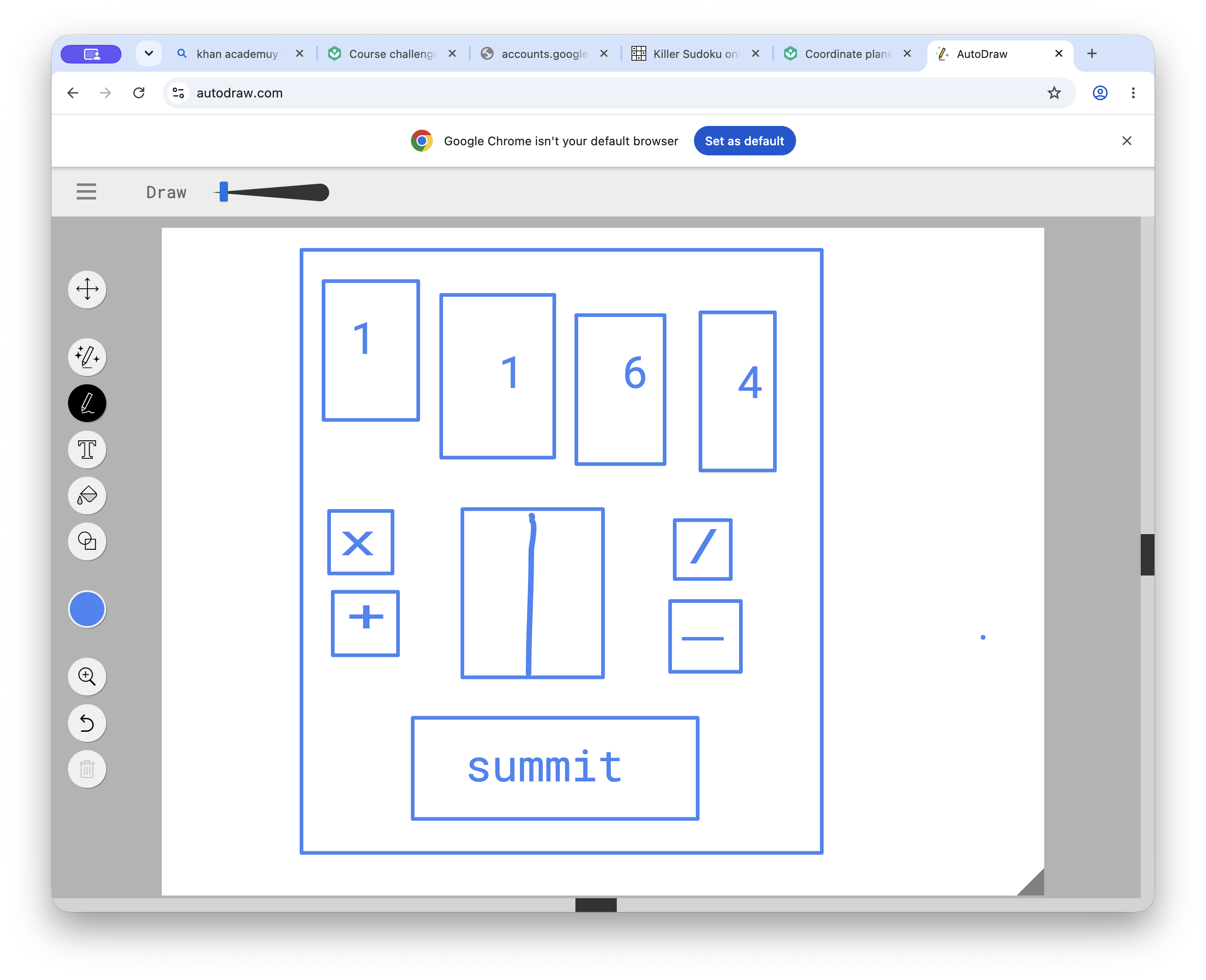
Instead of opening Xcode immediately, I asked Cloud to design the game first.
Standing at the whiteboard, he sketched a simple 24-point game: four number cards, a place to enter an expression, and a Submit button.
That drawing was complete enough to begin programming.
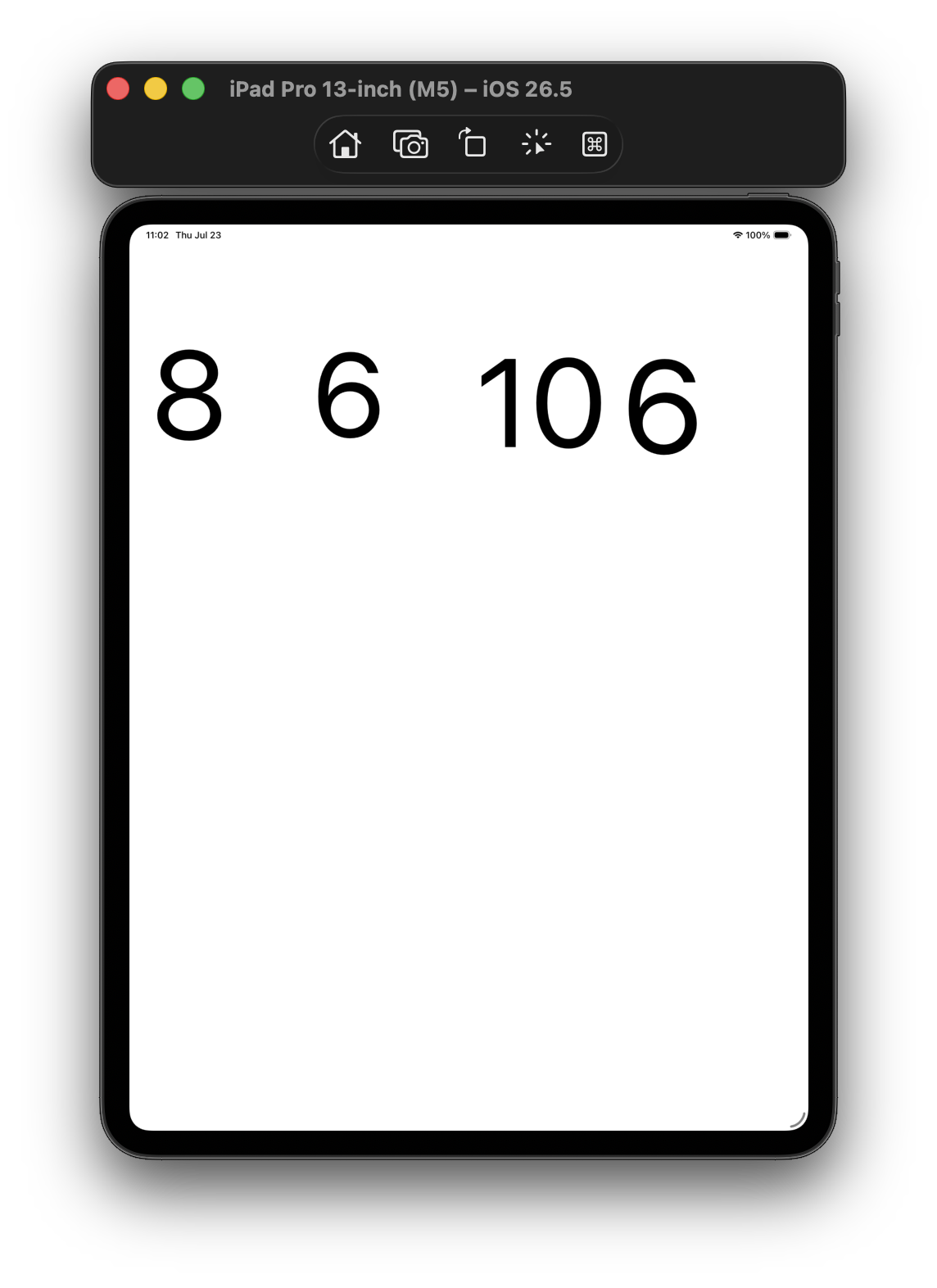
In Xcode, he connected four UILabels to the storyboard, generated four random numbers, and watched his first playable screen appear on the iPad.
let number1 = Int.random(in: 1...10)
label1.text = "\(number1)"
The game was simple, but it was real.
When the app finally worked, I sent a photo to the family WeChat group.
Donald: 这是 Cloud 第一款能用的 24 点 iPad 游戏!👍
This is Cloud's first working 24-point game on iPad!
陈海鹰: 那我中午要去玩!
Then I'm going to play it at lunch!
陈海鹰: 俞先生,你不是想做游戏吗?
Mr. Yu, isn't making games what you've always wanted to do?
陈海鹰: 你人生中第一款游戏。@@
*The first game of your life. @@*
Cloud: 陈女士。
Ms. Chen.
Cloud: 为什么屏蔽我的电话?
Why did you block my phone calls?
陈海鹰: 在!
I'm here!
Donald: 😂
To an outsider, this may look like an ordinary family conversation.
It wasn't.
Cloud's mother, Fish, has lived through nearly the entire history of China's mobile game industry.
Fresh out of university, she joined Tianpai, one of the pioneering companies building networked turn-based games for the Motorola 388 era—black-and-white Java phones that connected players long before smartphones existed.
Today, she runs her own game studio. Even this weekend, she had to pause family time to investigate a production bug reported by users.
Her dream is that one day, when her company can run without her daily involvement, she will return to Shenzhen University to pursue a Ph.D. on the history of Chinese mobile games.
Cloud's father is also a game developer. Long workdays stretching toward midnight are normal for him.
In other words, Cloud's first game wasn't created in isolation.
It was born into a family whose lives have been intertwined with game development for decades.
A first app doesn't need sophisticated algorithms.
It needs a complete creative cycle:
Imagine an idea.
Design it on a whiteboard.
Turn the design into code.
Watch it come alive.
Share it with someone who smiles and says, "I want to play."
That cycle teaches something deeper than programming.
It teaches that ideas can become reality.
A tiny family footnote
Ironically, the first time I met Cloud's father was because we needed his help installing Slack on Cloud's new MacBook Air.
That evening, he disappeared before 9:00 p.m.
I remember thinking:
What?! Before 9 p.m.? In Shenzhen?
Two days later, his voice suddenly appeared in a voice chat between Fish and me.
"I went to bed early for the World Cup Final."
Of course.
The 2026 FIFA World Cup Final between Spain and England kicked off at 3:00 a.m. Shenzhen time.
Only a game developer would consider that a perfectly reasonable reason to sleep early.