
Living Museum of Learning
Trust on the Rope: Learning to Climb at 59
At 59, after decades of living a grounded and careful life, rock climbing felt far away—almost like a sport for other people.
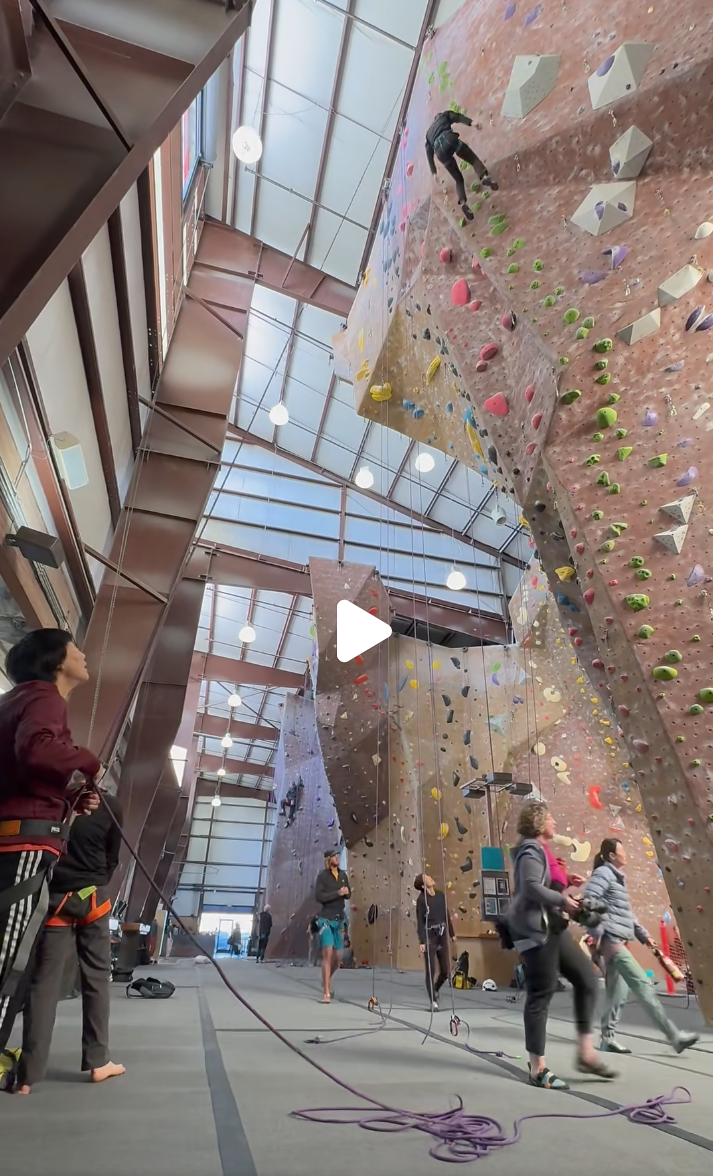
During a visit to their daughter in Silicon Valley, the couple stepped into a climbing gym for the first time.
What began as curiosity quickly turned into participation.
They learned basic belay technique and safety checks. The idea was simple but unfamiliar:
one person climbs, the other holds the rope.
Cindy, who had always been cautious about risk, not only tried climbing—but also stood below the wall to belay.
In that moment, roles shifted.
The climber was no longer alone.
There was now another person responsible for safety, attention, and trust.
When the rope was clipped and the climb began, the emotional weight of the system became clear:
“I am literally holding your life.”
And her response:
“Don’t worry. I won’t let you fall.”
The climb itself became secondary to the relationship formed through the rope.
Movements on the wall were slow, deliberate, and physical:
reaching
adjusting balance
overcoming fatigue
Below, the belayer stayed focused and steady, translating trust into action.
A 3-minute climb became a shared system:
one body upward
one body anchored downward
connected by continuous attention
Trust was no longer abstract.
It had a physical form.
Some learning happens through instruction.
But other forms of learning happen through shared risk in controlled environments.
This experience revealed:
trust is a practiced skill
responsibility can be learned at any age
physical collaboration builds emotional alignment
fear can transform into focus when shared
At 59, the couple did not just learn climbing technique.
They learned a new configuration of trust.
People can discover new physical and emotional capabilities later in life, including strength, coordination, and mutual trust under real responsibility.
Through shared activity in safe but challenging environments where roles are clearly defined and interdependence is unavoidable.
Trust is not only an emotion—it is a practiced coordination system between two people, reinforced through shared physical experience.