
Living Museum of Learning
The Happiest Loser at the Table
Situation
Donald grew up in his dad's army camp, fascinated by the sight of officials playing Golden Army as if they were fighting real battles on the board.
But his parents weren't board-game people. Donald had a sister three years younger and a brother another five years younger. Playing the game required a third person to serve as referee, and that person was often missing.
Cindy had a different childhood. With two brothers and one sister, she never had to worry about finding a referee. LOL.
Decades later, Donald brought Golden Army back to life. This afternoon, he and Cindy sat down at their coffee place, Tim Hortons, to play their very first game.
Turning Point
Cindy wasn't merely testing Donald's creation. She wanted to beat its author.
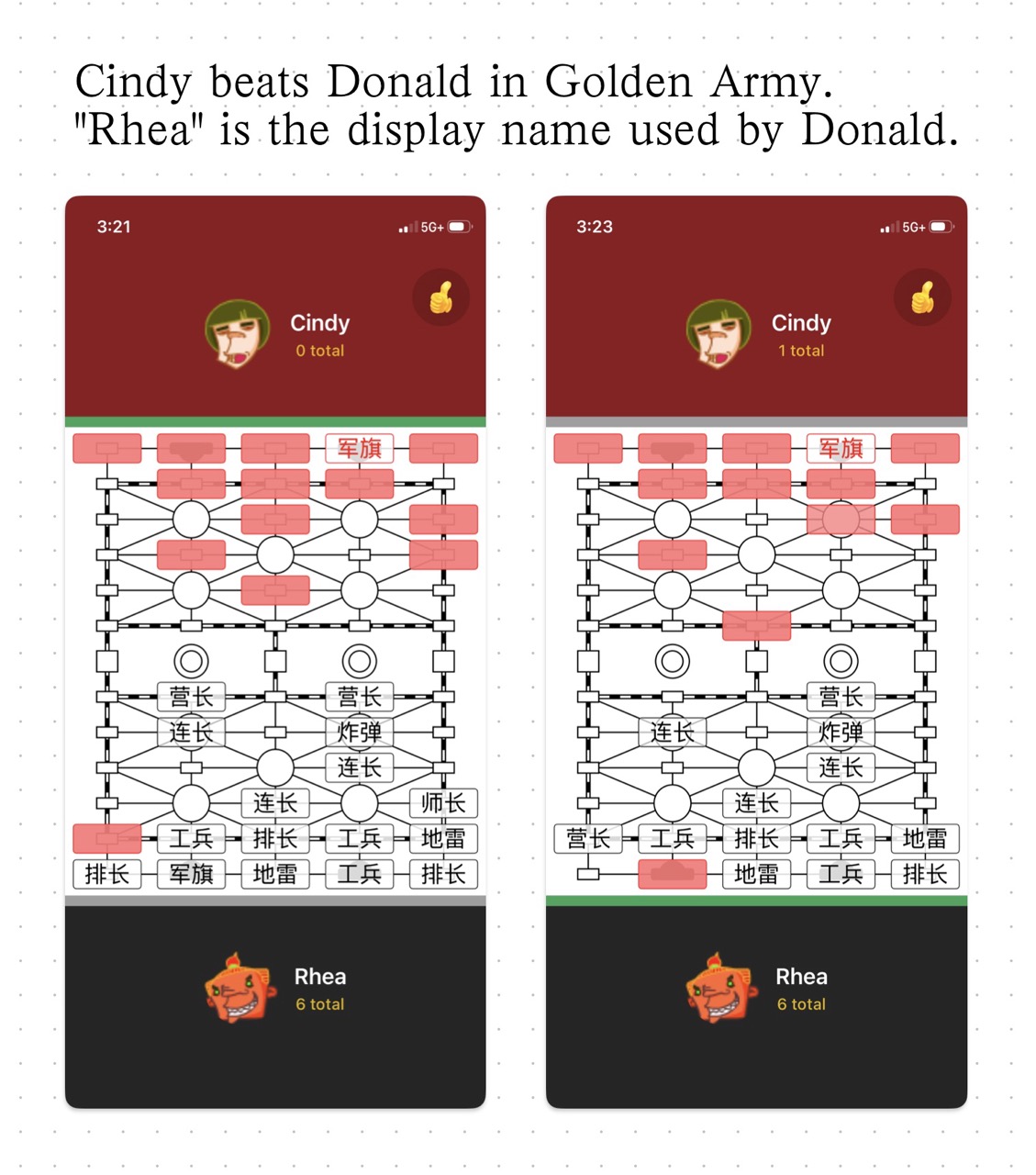
She invested real time in deployment, and eventually, she captured Donald's Army Flag.
Donald had remembered to take two screenshots: one immediately before the capture, and one after.
But while Cindy celebrated her victory with a shining face, Donald was in heaven looking at her.
The author had lost. The husband was happier than ever.
Emergence
On the way home, they talked about wooden and plastic pieces, and about the referee who often stood between two players and made the game possible.
But another truth emerged, one Donald had already discovered on the badminton court.
Whenever Cindy caught him in trouble, she was happy. And Donald was happier.
He didn't need to win to enjoy the game. Seeing Cindy's delight was its own kind of victory.
Now their daughter An and her husband Gavin play board games and card games with their family. Their granddaughter Rhea has already sat at the Blokus table.
Donald imagines playing Golden Games with Rhea soon — one game at a time, again and again.
Perhaps she will eventually beat Grandpa, too.
And perhaps she'll discover the same secret he did:
You don't always have to win the game to be the happiest person at the table.
Learning
A game can carry childhood memories across generations.
Creating something can bring forgotten parts of life back into the present.
The joy of playing together can matter more than the outcome.
A family culture of play gives the next generation something precious: people who are always ready for another game.
Sometimes, another person's happiness is the greatest reward you can win.
Theme
Joy in Another's Victory
What Is Possible?
An old childhood game can return decades later, bringing memories to life and creating new ones with the next generation.
How Does It Happen?
Through making, playing, sharing stories, and repeatedly choosing to enjoy the experience together — even when the other person takes your Army Flag.
Why Does It Matter?
Because the games we play can become more than games. They can connect childhood to adulthood, spouses to each other, and grandparents to grandchildren. And they can teach us that winning isn't the only way to be happy.