
Living Museum of Learning
The Button We Didn't Know We Had
Situation
This morning, the BrainyQuote I sent to three families was Einstein's:
Learn from yesterday.
Live for today, hope for tomorrow.
The important thing is not to stop questioning.
A few hours later, I had a very small problem to question.
For more than a year, almost all of my students had been using Slack in a rather clumsy way when they wanted to send me code.
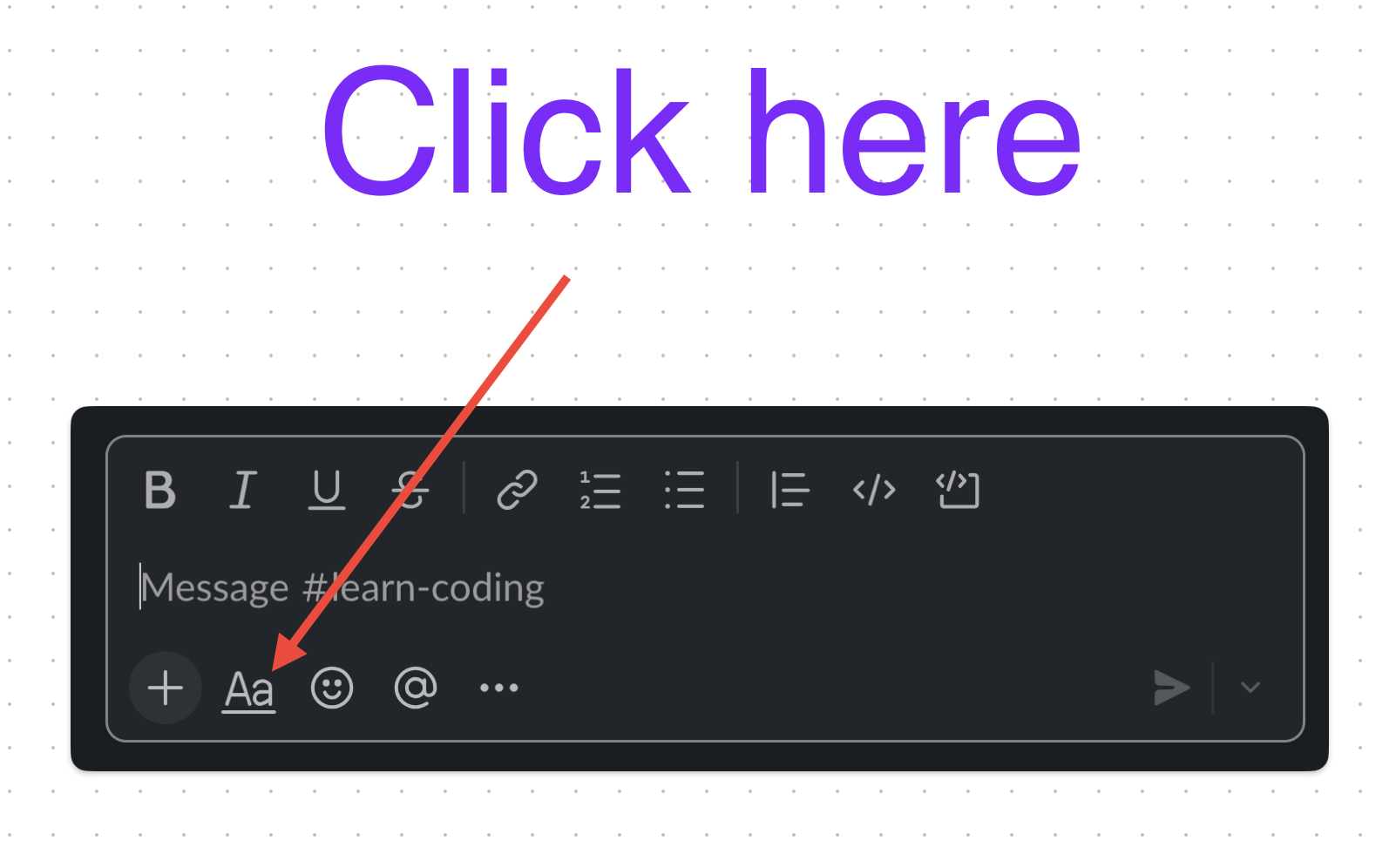
They would paste the code into the message box, select the code, and only then would the formatting row appear:
B · I · U · ... · fixed-width code
Then they could click the fixed-width button.
I had seen this happen countless times, but I never had the problem myself. So I had no idea why that row was missing on their computers — Mac or Windows.
And nobody seemed particularly bothered by it.
It had simply become part of the routine.
Turning Point
After Enning's class this morning, I finally decided:
Enough. Let's attack this weird little problem.
Enning and I started clicking around Slack.
Here?
No.
There?
No.
Maybe this?
No.
We clicked this and that, but somehow managed to click everything except the one button that mattered.
The class ended.
So I said:
“OK, no worry about it. I'll give it a try later. Bye, Enning.”
😂
Emergence
Later, I found it.
Aa.
Click Aa, and the entire formatting row appears.
That's it.
A problem that had been bothering almost all of my students for more than a year had a one-click solution that was sitting right there in front of us.
And neither Enning nor I saw it.
Learning
Sometimes a workaround becomes so familiar that we stop seeing the problem.
My students had developed a perfectly functional ritual:
paste → select → formatting appears → choose code
For more than a year, nobody needed to ask why.
And I was no better.
Even when I finally decided to investigate it, Enning and I spent the entire last part of the class clicking everywhere except Aa.
The important thing is not to stop questioning.
Apparently, this applies to Slack too. 😄
Theme
Question the routine.
A strange little inconvenience can survive for a surprisingly long time when everyone has learned how to work around it.
What other things in our everyday lives have we quietly accepted simply because we found a workaround?