Living Museum of Learning
The Little Counterexample
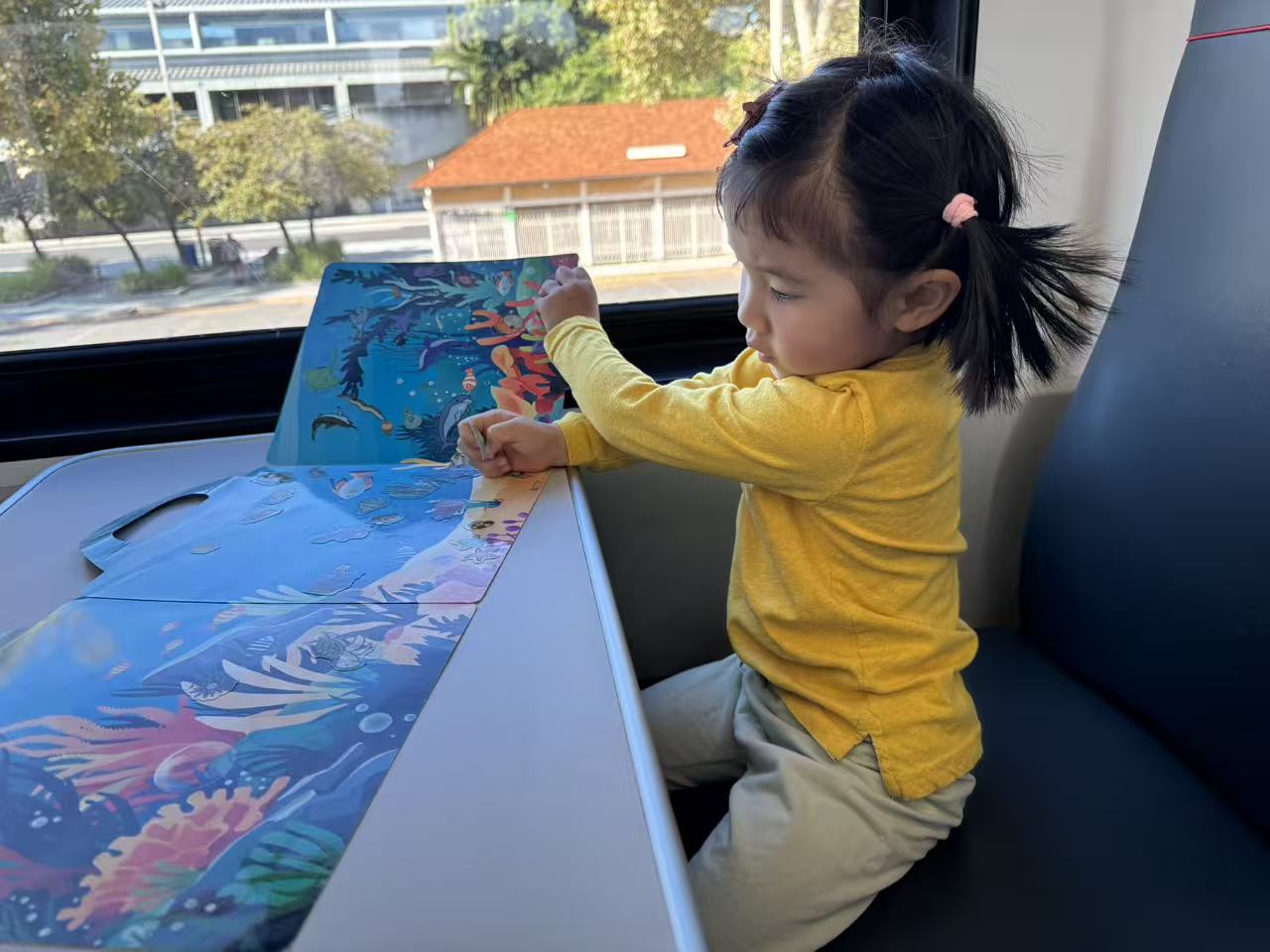
Rhea wanted to ride a train.
She had never had the chance.
Then Gavin came up with an unusually clever plan.
Instead of making the trip from Sunnyvale to San Francisco as one continuous, fast drive, he deliberately split it into three segments:
Drive → Train → Drive
He drove An and Rhea to a station, let them take a train for about 50 minutes, and then drove to a station near San Francisco to pick them up.
Gavin arrived 30 minutes early and waited.
For Gavin, this was an inefficient way to travel.
For Rhea, it was her first train ride.
And for those 50 minutes, the train itself became the destination.
Rhea walked along the aisle.
She watched.
She talked.
She kept talking—perhaps to An, perhaps to other passengers, perhaps simply to herself. It didn't seem to matter. 😂
A lady sitting nearby was interested at first.
Twenty minutes later, she put on her earphones.
Rhea continued.
A few days later, another tiny moment revealed something even more interesting.
An said:
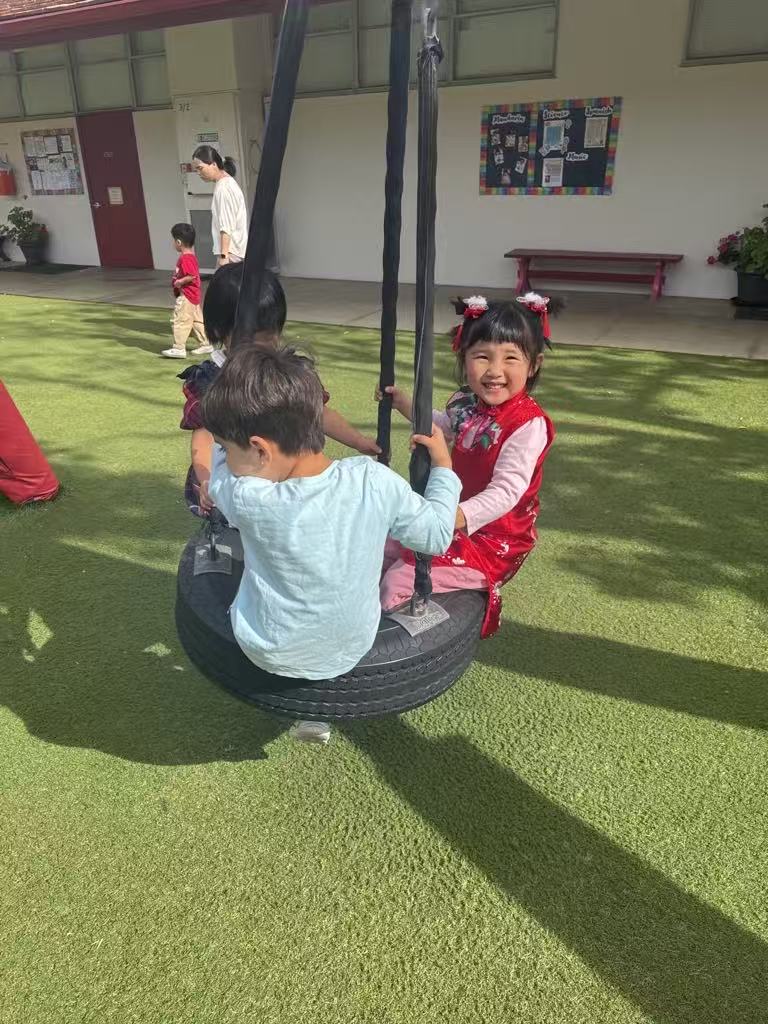
“Rhea, you have a lot of fun spinning on the tire swing in school every day, right?”
The new school really did have a tire swing.
But Rhea didn't simply agree.
She said:
“No. In my old school…”
There had been no tire swing in her old school.
Rhea had apparently noticed that “every day” was a much stronger statement than “sometimes at my new school.”
The old school days were counterexamples.
It was almost a three-year-old version of:
“Every integer is positive.”
“No. What about −1?” 😂
The same little mind kept revealing itself in other ordinary moments.
Once, a huge TV screen showed a photograph of An giving birth to Rhea.
Rhea asked:
“Why did you bring me to hospital?”
An explained:
“No. Daddy and Mommy were in the hospital. You were in my belly.”
Rhea immediately tried to complete the missing causal step:
“So you opened your shirt to let me out of your belly?”
She wasn't satisfied with merely knowing what happened.
She wanted to know how it could happen.
At school, all 22 children were asked to dress in traditional costumes.
Only Rhea did.
The teacher put a red dot on Rhea's face—perhaps combining or borrowing from cultural traditions.
Rhea didn't complain.
She simply wiped it off.
And when given the choice of sitting with her classmates or sitting with teachers, Rhea often preferred the teachers.
Perhaps teachers were simply more interesting conversational partners.
Perhaps she was looking for something else.
At three, we don't need to decide.
We can simply watch.
None of these moments is, by itself, evidence of extraordinary intelligence.
The interesting thing is the pattern.
Rhea seems increasingly willing to:
compare a statement with her own experience;
notice when “every” is too strong;
remember exceptions;
ask when an explanation is incomplete;
construct her own causal model;
choose what she finds interesting rather than automatically following the crowd;
and keep exploring even when nobody is providing an audience. 😂
This is not formal mathematics.
It is something that comes before formal mathematics.
Before symbols such as ∀ and ∃, there is the little voice saying:
“Wait. That's not true for every case.”
Before a proof, there is:
“How could that possibly happen?”
Before a scientific model, there is:
“But why?”
And before independent thinking becomes a deliberate skill, there may simply be a three-year-old quietly wiping a red dot off her face.
Can a three-year-old already notice exceptions, challenge an overly broad statement, construct explanations, and make independent choices?
Not necessarily through lessons. Sometimes it happens because someone redesigns a trip to give a child her first train ride, asks questions, listens carefully, and leaves enough space for her own observations to emerge.
Because the deepest beginning of learning may not be knowing the answer.
It may be developing the courage—and the habit—to say:
“Wait. I don't think that's right.”
And then explaining why.