Living Museum of Learning
Confidence Is a Choice Too
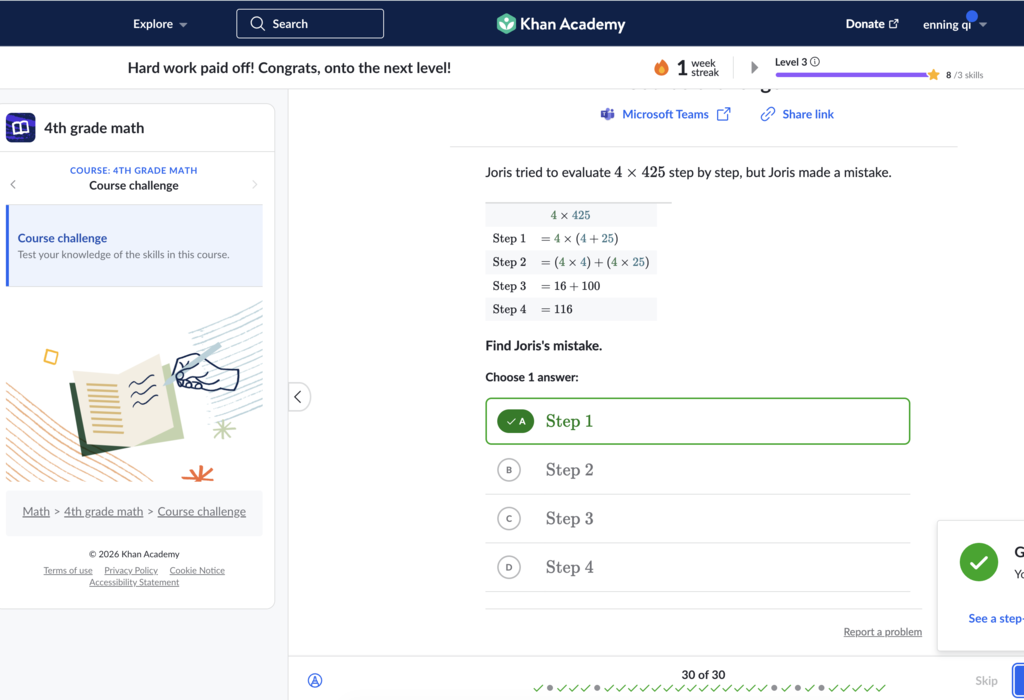
Everyone, including Enning herself, knows that her math foundation is weak. Yet when we work on math, she shows no less confidence. Today she redid Khan Academy's Grade 4 Course Challenge and got 25/30—the exact same score as yesterday. I said, “Not better than yesterday, but we practiced more. Not bad.” She smiled and replied, “没有退步。”
We worked through the relationships among cups, pints, quarts, and other units. Enning calculated carefully and confidently, step by step. Whenever a mistake was spotted, she faced it with a smile.
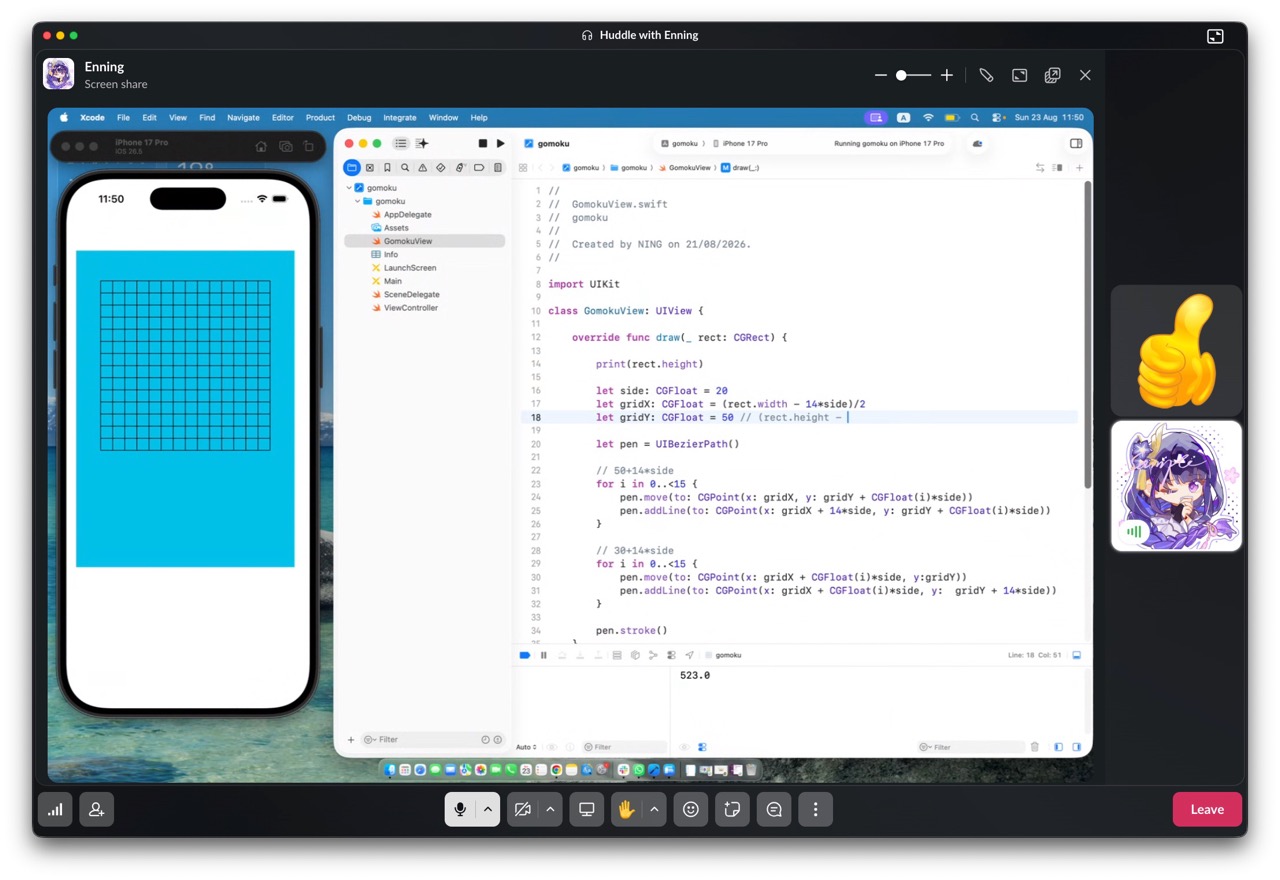
Then, in the second half of class, we refactored her Gomoku code. We replaced fixed coordinates with meaningful variables such as side, gridX, and gridY, so the board could adapt to the size of the view.
I asked, “Do you remember a good name I told you before for this distance?”
She immediately answered:
“gridX.”
I was thrilled.
Two seemingly different things emerged from the same learner: she could face a wrong math calculation without losing confidence, and she could recognize and reuse an abstraction in her code.
She was not simply memorizing gridX. She was beginning to see that a number representing a position could have a meaningful name—and that meaningful names make programs easier to understand and change.
I have heard a rock climber say, “Fear is a choice.” Today Enning reminded me that confidence is a choice too.
Her confidence does not come from always being right. It comes from being willing to discover where she is wrong and continue.
And she reminded me of something else: sometimes a student doesn't just become stronger through teaching. The student makes the teacher more confident in the educational mission.
Enning made Donald more confident to keep pursuing an education in which mistakes are safe, curiosity is valued, abstraction is discovered, and difficult things can be approached with a smile.
A student with a weak math foundation can become a confident mathematical thinker and an increasingly thoughtful programmer.
Make mistakes safe, keep thinking step by step, and turn concrete experience into reusable abstractions.
Confidence is what allows a learner to keep exploring an unfamiliar route—and sometimes the learner gives the teacher confidence to keep going too.