
Living Museum of Learning
An Honest Question
Cloud had just received two homework assignments.
His immediate reaction was simple:
"为什么有两个?"
"Why are there two?"
The answer was playful:
"因为 Tianjing 来了。😄"
"Because Tianjing has joined us. 😄"
Cloud was unconvinced.
A few moments later, he asked again:
"他跟我有啥关系?"
"What does that have to do with me?"
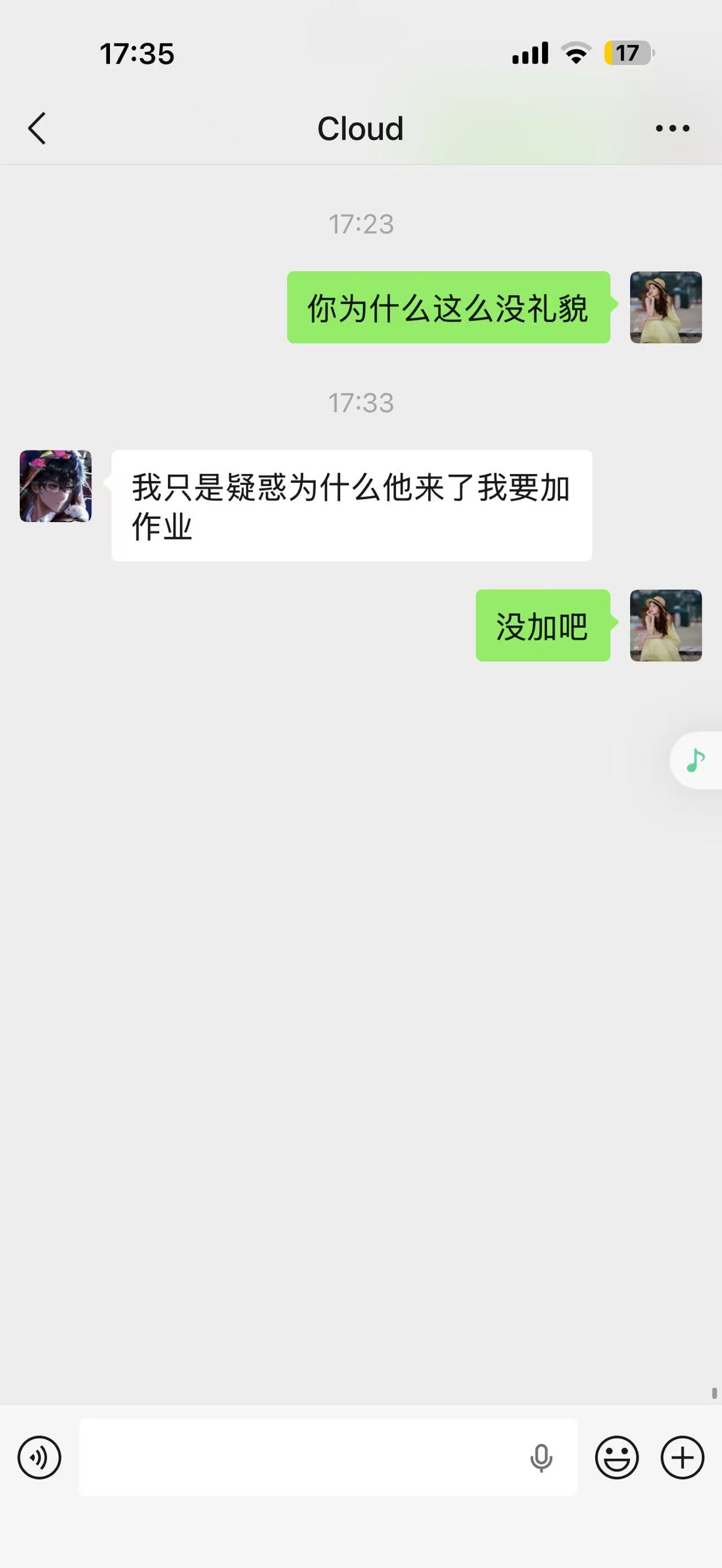
Later, Cloud's mother privately shared another conversation.
She had asked him:
"你为什么这么没礼貌?"
"Why were you so impolite?"
Cloud replied:
"我只是疑惑为什么他(她)来了我要加作业。"
"I was just wondering why someone joining means I have more homework."
Then his mother answered:
"没加吧。"
"You didn't actually get more homework, did you?"
For the teacher, this private conversation changed everything.
Cloud had not been trying to offend anyone.
He was simply trying to understand the logic.
Cloud's mother later sent another message:
"不好意思,他有点没礼貌。"
"I'm sorry. He was a little impolite."
The teacher replied:
"我喜欢直率的朋友。"
"I like straightforward friends."
Cloud's mother answered:
"谢谢你还那么有耐心。"
"Thank you for being so patient with him."
The conversation immediately became lighter.
There was no criticism.
No lecture.
No embarrassment.
Only understanding.
Only hours earlier, the same student had proudly submitted his homework before dinner.
He attached screenshots.
He tested his own program repeatedly.
Then he sent one excited message:
"gaodingl"
He meant:
"搞定了!"
"Done!"
A tiny typo.
A huge smile.
Two weeks earlier, he had never written a line of code.
Now he was asking questions without fear.
Solving problems independently.
Sharing his work with pride.
The same confidence that appeared in programming was beginning to appear in conversation.
Children do not always ask polished questions.
Sometimes they ask honest ones.
If every awkward question is treated as disrespect, curiosity becomes quieter.
If an honest question is welcomed and clarified, curiosity becomes stronger.
Good classrooms are not places where students never say the wrong thing.
They are places where students feel safe enough to say what they are really thinking.
A classroom can become a place where students feel safe asking honest questions.
By responding to curiosity before judging expression.
Students who trust their teachers enough to reveal confusion are already halfway to understanding.