
Living Museum of Learning
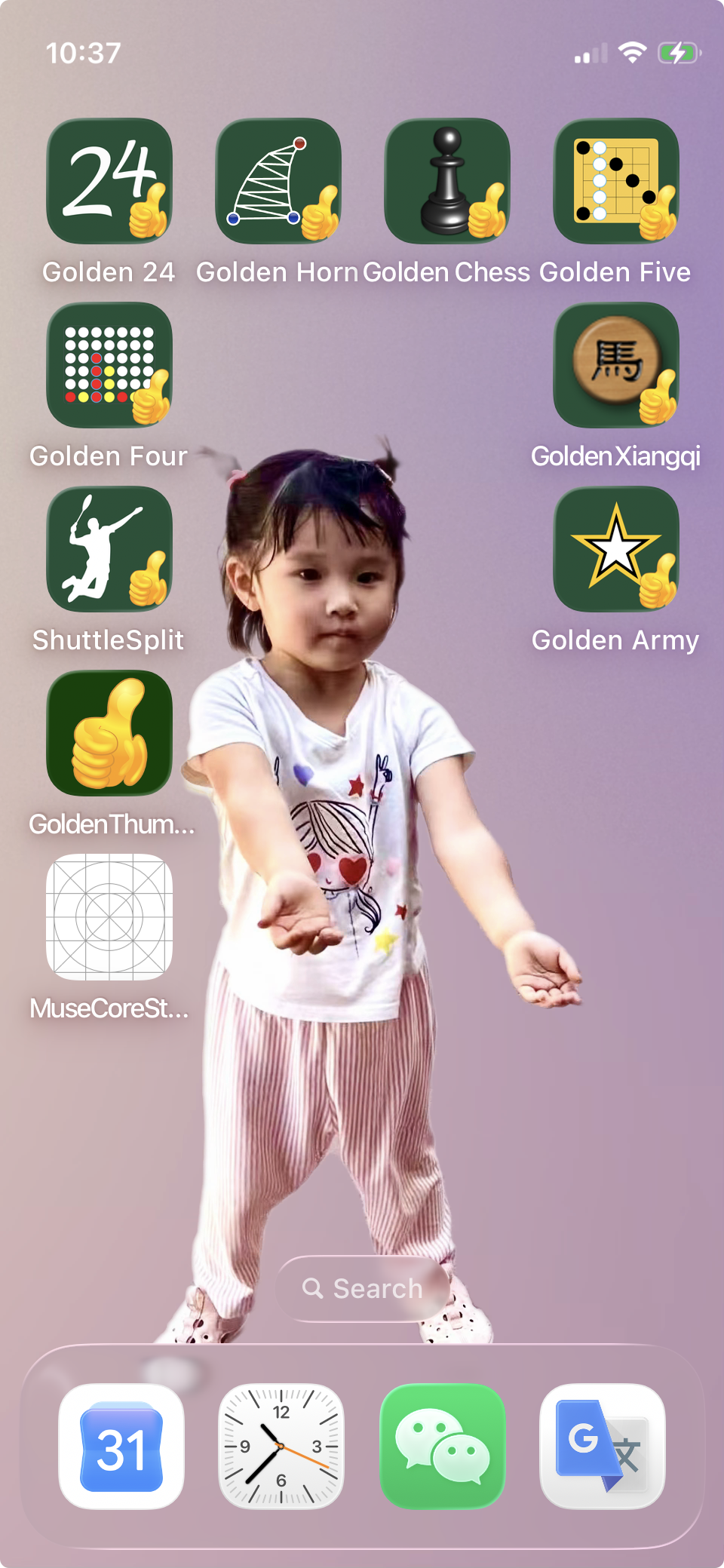
Rescuing Seven Lost Games
Six years ago, I released several board games on the App Store.
Over time, iOS evolved. Frameworks changed. Architectures aged. Some games no longer compiled. Others lost important features. Nearby multiplayer stopped working. Maintaining each game individually became unrealistic.
Most software slowly disappears this way—not because anyone decides to abandon it, but because time quietly leaves it behind.
Then, exactly two months ago, I decided to see whether they could be rescued.
The goal sounded simple:
"Make one old game work again."
But every repair uncovered a deeper pattern.
A board layout improvement helped another game.
A networking fix became reusable.
A player panel became common UI.
A withdrawal mechanism generalized.
A multiplayer session manager evolved.
A platform architecture slowly emerged.
Instead of fixing seven separate applications, I found myself extracting the ideas they all shared.
The project stopped being restoration.
It became architecture.
The Git history tells the story better than memory can.
It begins with commits like:
Initial Golden Four SwiftUI project
Then:
Embed UIKit BoardView into SwiftUI
Validate reusable Golden Platform shell architecture
Soon came entirely new games:
Golden Horn.
Golden Xiangqi.
Golden Chess.
Shared networking.
Shared layouts.
Shared player identity.
Shared multiplayer.
Shared animations.
Even unexpected detours—like discovering that nearby multiplayer problems were likely caused by changes in iOS rather than our own code—strengthened the architecture instead of derailing it.
By the end of the journey, seven forgotten apps were alive again.
But the greatest achievement wasn't the apps themselves.
It was the platform they now shared.
Restoration is rarely just restoration.
When you rescue enough old systems, patterns begin to emerge.
Those patterns become abstractions.
Abstractions become reusable components.
Eventually, what started as maintenance becomes the foundation for future creation.
Sometimes the best architecture isn't designed first.
It is discovered while solving many small problems.
A collection of aging applications can evolve into a unified platform instead of remaining separate maintenance burdens.
By solving one concrete problem at a time, extracting what is reusable, and letting architecture emerge from repeated experience rather than forcing it upfront.
Platforms multiply future creativity. Every improvement made once benefits many applications, turning maintenance into momentum.
Git log even has a beautiful narrative arc:
May 17: Initial Golden Four SwiftUI project.
May 18: Validate reusable Golden Platform shell architecture.
July 16: A stream of commits polishing Golden Chess, Xiangqi, Horn, Army, and the platform itself.
Exactly two months.
That's not just a refactoring project.
That's the birth of the Golden Platform.
This afternoon, Golden Four 1.5 was approved by Apple.
This evening, Golden Chess 1.5 entered Waiting for Review.
Exactly two months after this journey began.
Not a bad life for an iOS developer who just turned 60. 😊