
Living Museum of Learning
Ethan Forgot the "Right" Answer
One of our early programming projects was the Game of 24.
The computer needed to generate four random cards, each with a value from 1 to 10.
Nearly every student began the same way:
rand() % 10
Then they discovered that 0 appeared but 10 never did.
Some tried:
rand() % 11
Now 10 appeared—but so did the unwanted 0.
Eventually everyone arrived at the widely accepted solution:
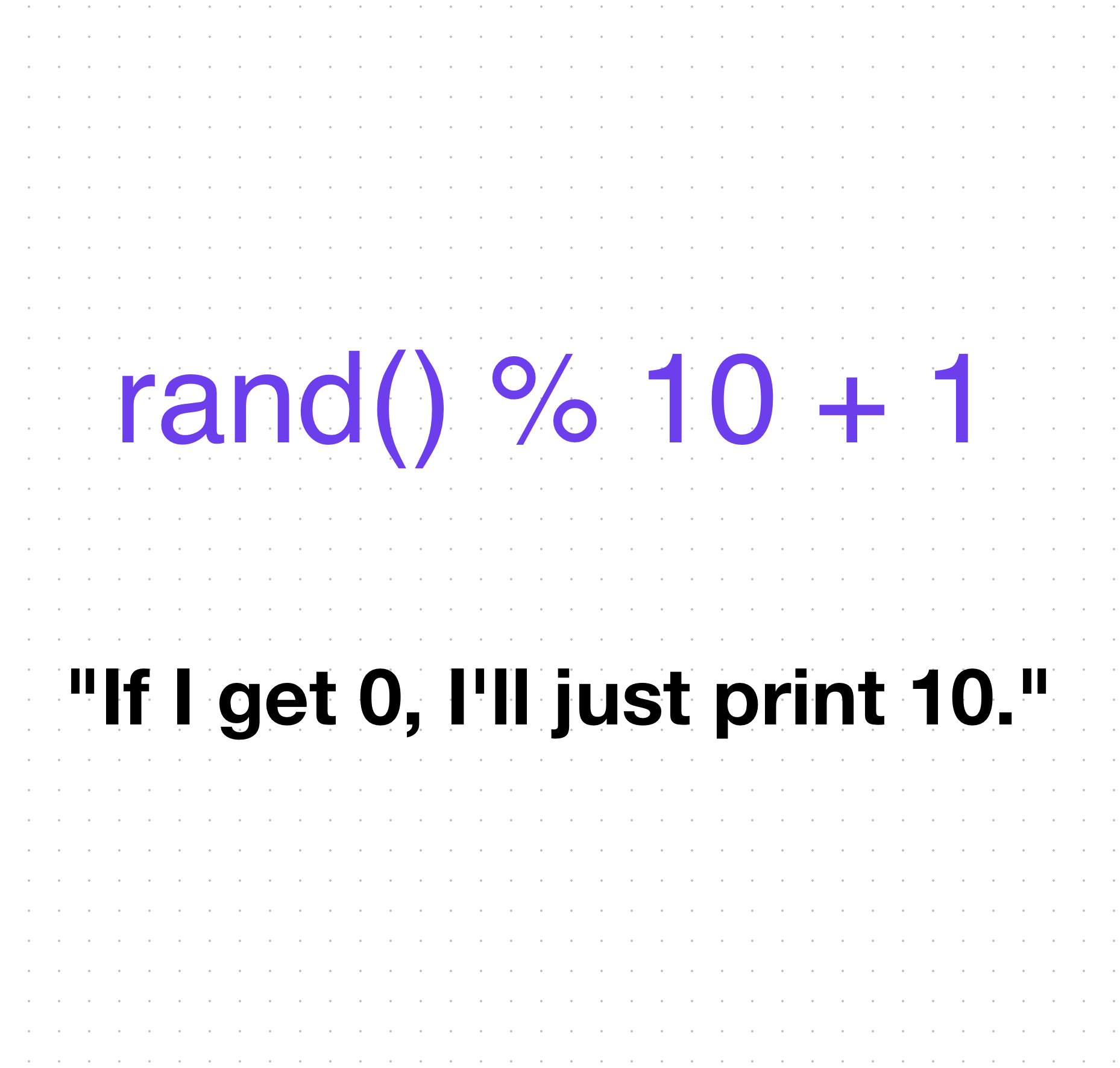
rand() % 10 + 1
Three years earlier, Ethan had reached exactly the same conclusion.
By Grade 5, Ethan had completely forgotten the "standard" solution.
He paused for a moment and suddenly said:
"If I get 0, I'll just print 10."
It worked.
Instead of changing the random-number formula, he changed the interpretation of one outcome.
The problem had been solved from a completely different direction.
His solution wasn't the conventional one.
It wasn't the one found in textbooks.
It wasn't even the one he himself had discovered years before.
It was simply the idea that made sense to him at that moment.
That tiny flash of originality was worth celebrating.
Not because it was more efficient.
But because it was genuinely his.
Education often rewards remembering.
Creativity sometimes begins with forgetting.
When Ethan no longer remembered the "official" solution, he stopped trying to recall it.
Instead, he started thinking.
The result was not the expected answer.
It was an original one.
Those small moments of independent thinking deserve the greatest encouragement.
A single programming problem can have more than one correct solution.
When students reason from first principles instead of memory, new ideas naturally emerge.
The goal of education is not only to remember good solutions, but also to develop the confidence to invent new ones.
Original sparks like this should always receive the greatest encouragement.