Living Museum of Learning
Peter's Mom Joins the Sudoku Challenge
I shared an Expert-level Sudoku puzzle with Peter and his family.
Peter was already a familiar face in our Dream Team—a two-time internal programming champion.
I expected the puzzle to interest him.
Instead, it also caught his mother's attention.
She had majored in mathematics at university.
Rather than solving it on a computer, she chose a different approach.
"I can't do it on the screen."
So she printed the puzzle.
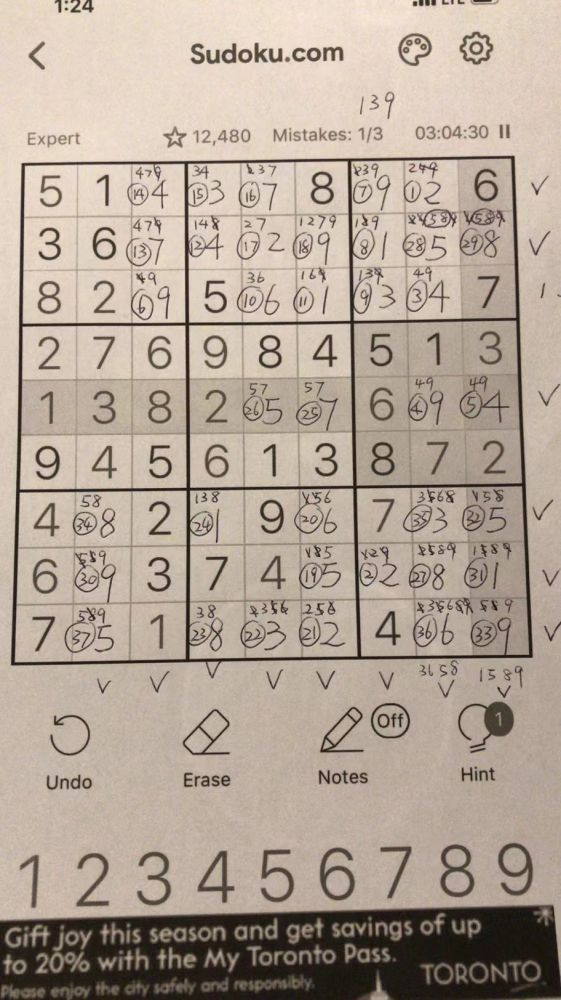
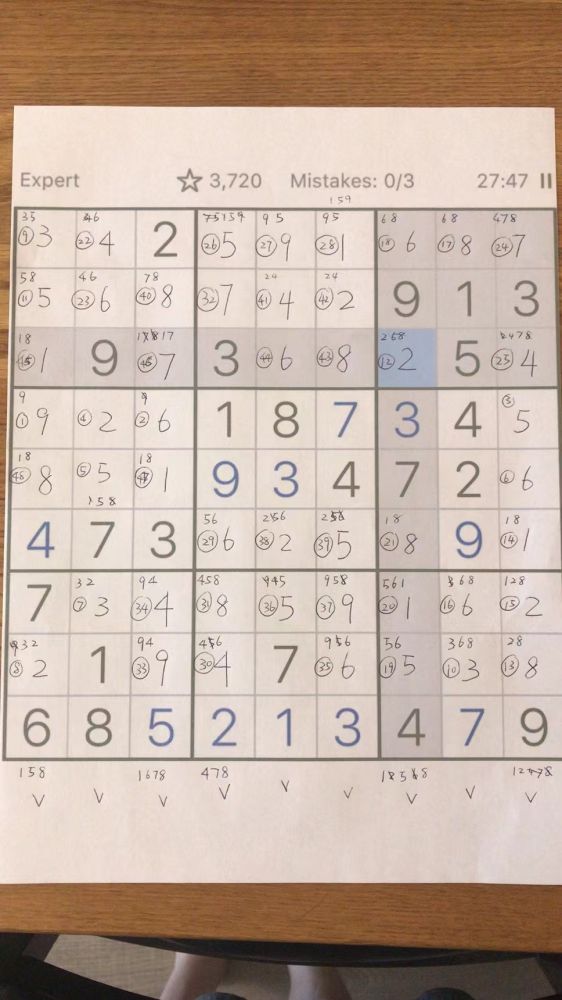
With nothing more than paper and pencil, she settled in to reason through it.
Over the next several hours, she sent updates.
"This is fun."
"Now I have today's entertainment."
"Mental gymnastics."
She made one incorrect assumption, discovered the contradiction, erased her work, and began again.
The second attempt progressed much more smoothly.
In the end, she had spent three or four enjoyable hours on a single puzzle.
We still have the screenshots.
Not of the completed Sudoku.
But of the handwritten journey.
Printed paper.
Pencil marks.
Reasoning unfolding one deduction at a time.
Those pages remind us that beautiful mathematics does not belong to one age group.
A good puzzle invites anyone willing to think patiently.
Learning does not always travel from teacher to student.
Sometimes it moves sideways.
Sometimes it moves home.
A challenge given to a child can become an evening of joy for a parent.
That may be one of education's quietest successes:
When curiosity becomes something a family shares.
A challenging mathematical puzzle can engage learners across generations.
Curiosity spreads naturally when problems are shared instead of assigned.
The best learning experiences continue after class and often become part of family life.