Living Museum of Learning
Nicole's Pulley System
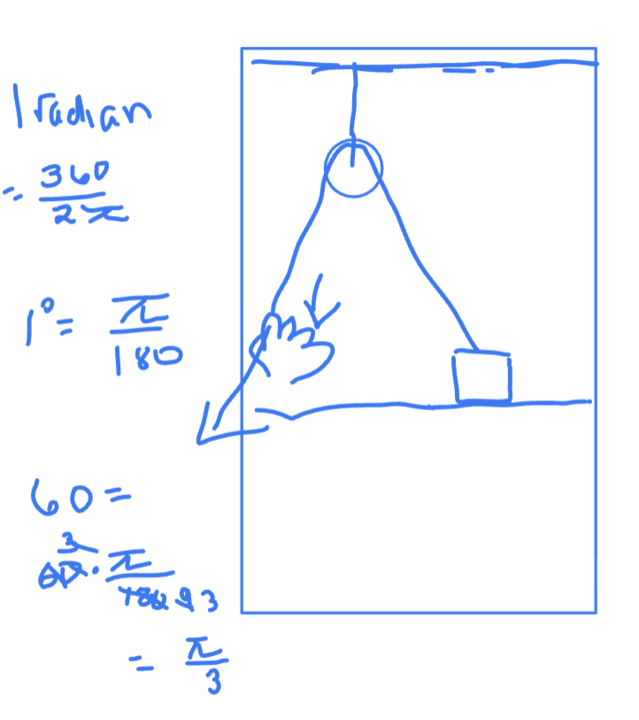
Nicole's pulley design looked different from the very beginning.
Unlike the vertical pulley systems built by other students, her ropes spread outward at both ends. The sketch immediately suggested a more complicated structure.
Looking at her drawing, I said:
"You'll need a support structure here. There has to be a ceiling above the pulley."
She quickly added several lines to her sketch and replied:
"Then I can pull downward from here."
But one important question remained:
"In which direction?"
The direction of the applied force had to align with the direction of the rope. Otherwise, the entire system would be physically inconsistent.
Nicole paused, reconsidered the geometry, and adjusted her design.
At this point, it became clear that her design was more difficult than a vertical pulley.
The angled ropes introduced mathematics.
I gently asked:
"Do you still remember your trigonometry?"
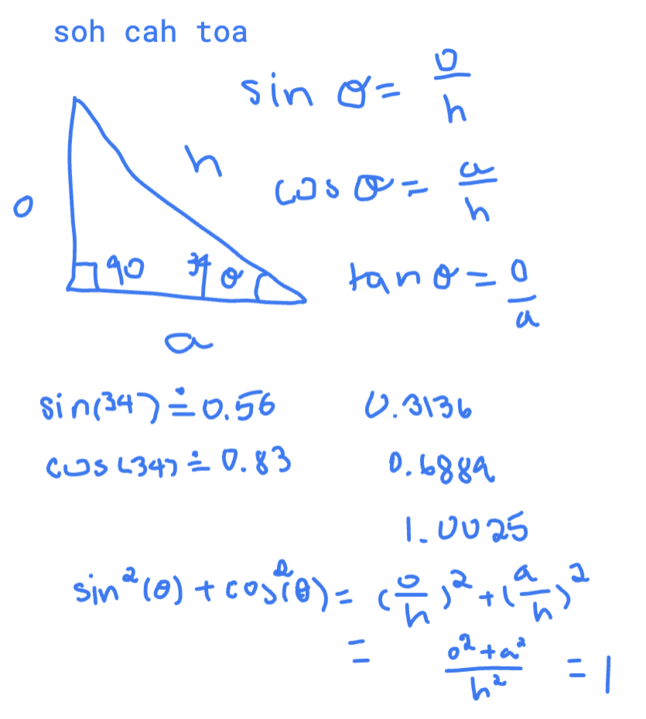
Instead of simply recalling formulas, Nicole rebuilt the ideas from the ground up.
She reviewed:
degrees and radians,
right triangles,
SOH CAH TOA,
sine and cosine.
She even reconstructed the identity:
sin²θ + cos²θ = 1
What appeared at first to be a quick review became a genuine rediscovery.
The mathematics was no longer separate from the project.
It had become necessary.
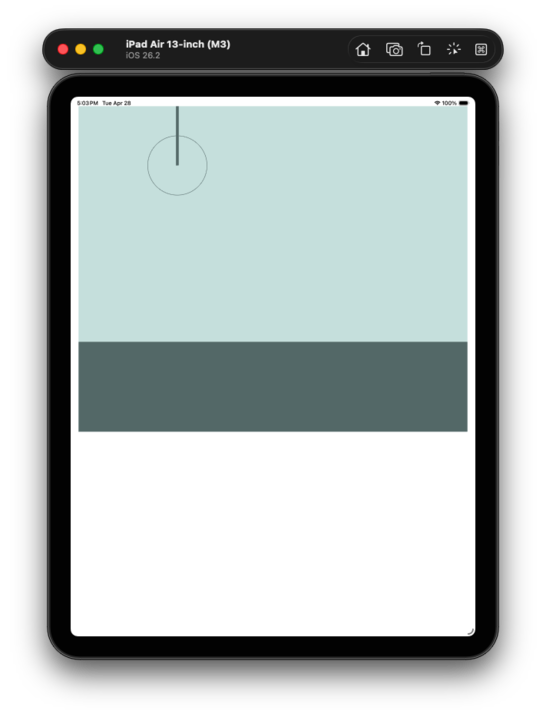
Once the mathematical foundation was restored, Nicole opened Xcode and returned to her design.
Nicole has always cared deeply about the appearance of her projects.
Her earlier work—3D bicycles, 3D badminton courts, and 3D basketball arenas—shows that she does not merely build objects.
She composes them.
After constructing the table, support posts, and pulleys, she did something very characteristic:
She opened the color picker.
Because the system also needed to look beautiful.
By the end of the lesson, she had completed:
a supported platform,
vertical posts,
suspended pulleys,
clean geometric structures.
The next step would be introducing forces, angles, and motion.
The system was ready.
This project revealed an important truth:
Mathematics often enters naturally when students pursue their own ideas.
Nicole did not study trigonometry because it appeared in a textbook.
She studied it because her design required it.
Physics provided the questions.
Mathematics provided the language.
Programming provided the medium.
Aesthetics provided the motivation.
At their intersection stood a student who wanted her creation to both work and look beautiful.
A student-designed pulley system can become a meeting point for mathematics, physics, programming, and artistic design.
Questions about force and direction naturally lead to trigonometry and geometric reasoning.
When students pursue their own ideas, mathematics becomes a tool for creation rather than a collection of formulas.
Mathematics × Physics × Aesthetics
This is where Nicole's pulley system lives.
And Nicole stands precisely at that intersection.