
Living Museum of Learning
The Little Film Rescuer
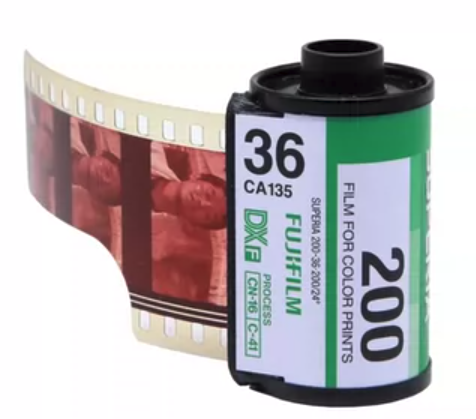
This story took place more than thirty years ago. A roll of photographic film had been accidentally rewound completely into its cartridge. The film leader disappeared inside the canister. In the age of film photography, this was a frustrating problem. Photo shops owned special tools called film retrievers, but ordinary families usually did not. At the time, Donald was studying physics in Beijing. During a summer visit home, he and his father spent more than ten minutes trying to recover the film. Neither could find a solution. Nearby stood Donald's younger brother, a second grader in elementary school. He quietly said: "I'll try." The adults paid little attention. He took the cartridge into his room and closed the door. Five minutes later, he returned holding the cartridge. The film leader had emerged perfectly. Nothing was damaged. No special tools had been used.
The child did not rely on luck. He took an old piece of discarded film and made small cuts beside each sprocket hole. By slightly bending the cuts, he created tiny hooks. He carefully inserted this homemade strip into the cartridge. The idea was simple: If one of the hooks could catch one sprocket hole on the hidden film leader, the entire film could be pulled out. Eventually one hook caught. The film emerged. The solution contained several important ideas: using available materials understanding the hidden structure inside the cartridge designing a tool for a specific purpose testing an idea physically improving the chance of success through repeated hooks This was not merely a lucky guess. It was engineering.
Many people think intelligence means calculating quickly or answering questions correctly. This small incident suggested something different. Real problem solving often begins when someone asks: "What tool can I make?" The second grader did not possess more knowledge than the adults. He approached the problem differently. Instead of solving the problem directly, he designed a device that could solve it.
Years later, this memory still feels remarkably modern.
Today we speak about makers, prototyping, design thinking, reverse engineering, and computational thinking.
A second grader in a small room, armed only with an old strip of film and curiosity, demonstrated many of these ideas long before such vocabulary became popular.
The exhibit reminds us that creativity often appears not as brilliance, but as the willingness to build a tool that does not yet exist.