Rhea's First Philosophical Question
On her third birthday, Rhea asked a question that has puzzled human beings for centuries: Why am I this, and not that?
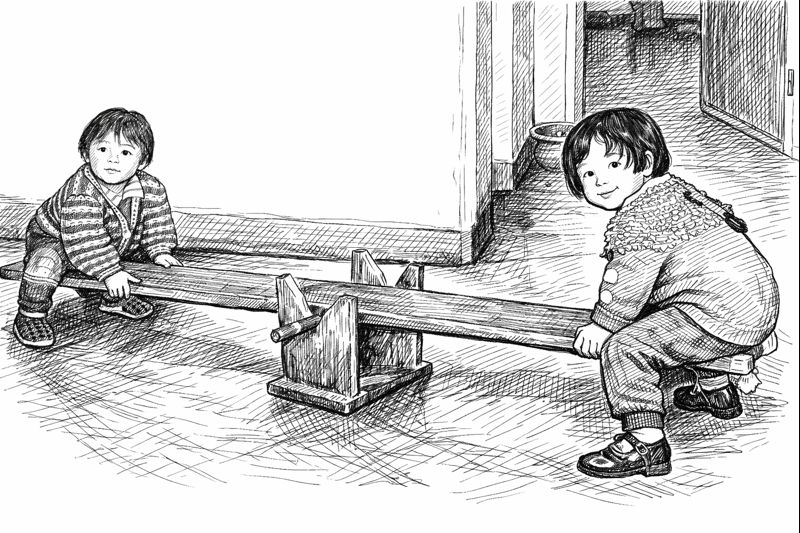
Standing on the living room carpet, Rhea began making observations about the people around her.
“Rhea is a girl. Mommy is a girl. Daddy is a boy.”
She pointed toward her father and thought quietly for a moment.
Then suddenly:
“Why? Why? Why? Why? Why?”
Pointing to herself, she asked:
“Why are Mommy and I not boys?”
Her mother answered in the straightforward way she often speaks to Rhea:
“Because we were born as girls.”
Rhea listened very carefully.
She paused.
Then she said:
“Oh.”
She nodded, as if the matter had been settled.
🌱 A Child's Question
Of course, she was asking about boys and girls.
But many childhood questions quietly point toward larger questions:
- Who am I?
- What kind of person am I?
- Why am I this way rather than another?
The beginning of thought is often not knowledge, but confusion. Not certainty, but curiosity.
It starts when something in the world feels surprising enough to provoke a simple question:
Why?
Many adults eventually stop asking such questions.
Children have not yet learned to stop.
That may be why children are sometimes closer to philosophy than the rest of us.